Introduction
Pharmaceutical packaging is an essential part of the pharmaceutical industry. It protects medicines from moisture, light, contamination, and physical damage, helping maintain their quality, safety, and effectiveness until they reach the patient.
The right pharmaceutical packaging also ensures regulatory compliance, supports safe transportation, and improves the overall customer experience. Whether you are a pharmaceutical company, distributor, exporter, hospital, or healthcare brand, selecting the right packaging is important for delivering high-quality products.
In this blog, we will explain the types of pharmaceutical packaging, their uses, common packaging materials, and the factors to consider when choosing the right packaging solution.
Why Is Pharmaceutical Packaging Important?
Pharmaceutical packaging is more than just wrapping a product. It plays a vital role in protecting medicines throughout their journey from manufacturing to the end user.
Some key benefits of pharmaceutical packaging include:
- Protects medicines from moisture, light, and contamination
- Maintains product quality and stability
- Extends product shelf life
- Ensures patient safety
- Meets regulatory and labeling requirements
- Makes storage and transportation easier
- Builds customer trust and brand value
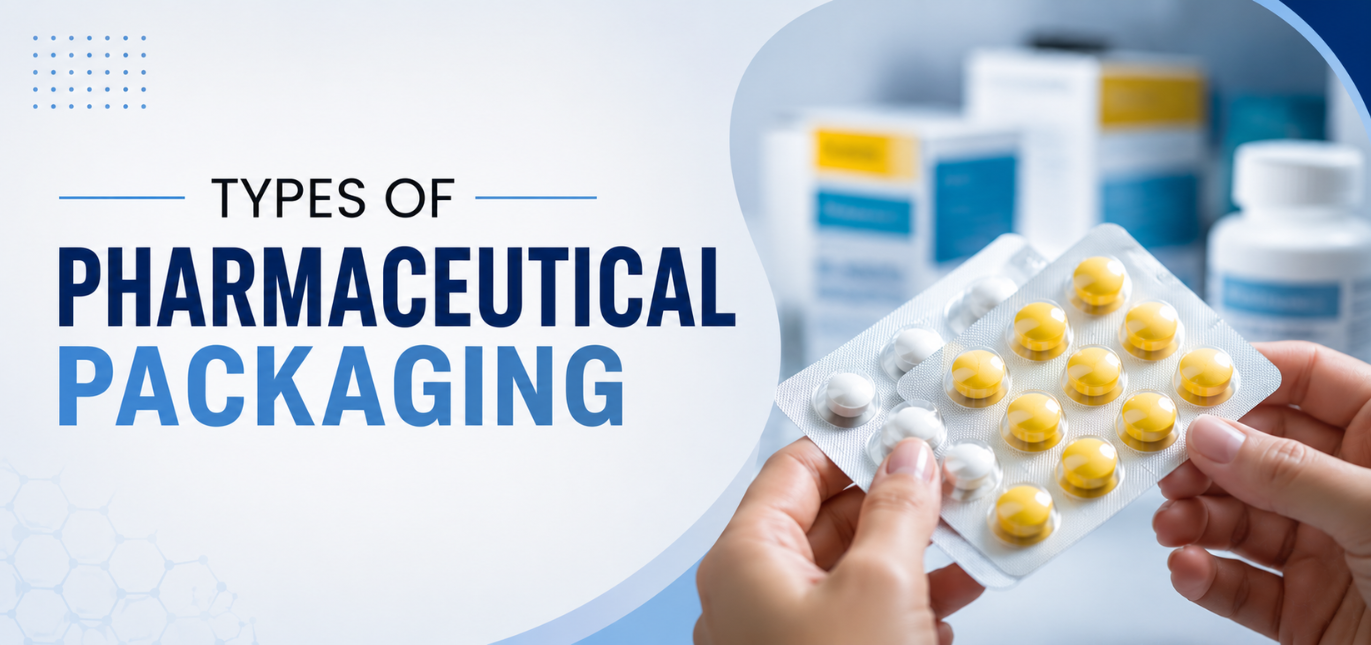
Types of Pharmaceutical Packaging
Pharmaceutical packaging is mainly divided into three types.
1. Primary Packaging
Primary packaging is the first layer of packaging that comes into direct contact with the medicine. It protects the product from contamination and keeps it safe until use.
Common Types of Primary Packaging
- Blister Packs
- Strip Packs
- HDPE Bottles
- Glass Bottles
- PET Bottles
- Ampoules
- Vials
- Sachets
- Tubes
- Prefilled Syringes
Common Applications
- Tablets
- Capsules
- Syrups
- Creams
- Ointments
- Powders
- Injectable medicines
- Nutraceutical supplements
Advantages
- Protects product quality
- Prevents contamination
- Improves shelf life
- Easy for patients to use
2. Secondary Packaging
Secondary packaging is the outer packaging that holds one or more primary packages together. It provides extra protection and is mainly used for branding, product information, and handling.
Common Types of Secondary Packaging
- Printed Cartons
- Folding Boxes
- Product Labels
- Information Leaflets
- Multi-Pack Cartons
Advantages
- Provides additional protection
- Improves product presentation
- Displays important product information
- Makes inventory management easier
3. Tertiary Packaging
Tertiary packaging is used for bulk storage, shipping, and transportation. It protects products during logistics and helps reduce damage while moving goods from the manufacturer to distributors or export markets.
Common Types of Tertiary Packaging
- Corrugated Boxes
- Wooden Pallets
- Plastic Pallets
- Stretch Wrap
- Shrink Wrap
- Shipping Containers
Advantages
- Safe transportation
- Easy warehousing
- Reduced product damage
- Better supply chain management
Common Pharmaceutical Packaging Materials
Different medicines require different packaging materials depending on their formulation and storage conditions.
| Material | Common Uses |
|---|---|
| Glass | Syrups, Injectables, Vials |
| HDPE | Tablets and Capsules |
| PET | Liquid Medicines |
| PVC | Blister Packaging |
| Aluminium Foil | Strip Packs and Blister Packs |
| Paperboard | Cartons and Boxes |
Factors to Consider When Choosing Pharmaceutical Packaging
Choosing the right packaging depends on several factors.
- Type of medicine
- Product stability
- Moisture and light protection
- Shelf-life requirements
- Storage conditions
- Transportation needs
- Regulatory compliance
- Export requirements
- Cost-effectiveness
- Branding and customer experience
Selecting suitable packaging helps maintain product quality while reducing the risk of damage during storage and transportation.
Latest Trends in Pharmaceutical Packaging
The pharmaceutical industry is continuously adopting new packaging technologies to improve product safety and customer convenience.
Some of the latest trends include:
- Sustainable and recyclable packaging
- Smart packaging with QR codes
- Tamper-evident packaging
- Child-resistant packaging
- Anti-counterfeit packaging
- Digital product authentication
- Track and trace systems
- Eco-friendly packaging materials
Choosing the Right Packaging Partner
A reliable packaging partner plays an important role in maintaining product quality and meeting industry standards. Businesses should choose a pharmaceutical manufacturing partner that follows strict quality control processes, uses high-quality packaging materials, and complies with national and international regulations.
Whether you are launching a new pharmaceutical product, expanding your nutraceutical range, or exporting medicines to global markets, choosing the right packaging solution can improve product safety, operational efficiency, and customer satisfaction.
Conclusion
Pharmaceutical packaging is a key part of every healthcare product. From protecting medicines to ensuring safe transportation and regulatory compliance, every packaging layer has an important role to play. Understanding the different types of pharmaceutical packaging helps pharmaceutical companies, distributors, and healthcare brands select the most suitable packaging for their products.
At Agrosaf Pharmaceuticals, we work with trusted WHO-GMP and ISO-compliant manufacturing partners to deliver high-quality pharmaceutical, nutraceutical, Ayurvedic, and dermatology products with packaging solutions that meet industry standards and customer requirements.
Frequently Asked Questions (FAQs)
1. What are the three types of pharmaceutical packaging?
The three main types are primary packaging, secondary packaging, and tertiary packaging.
2. Why is pharmaceutical packaging important?
It protects medicines from contamination, moisture, light, and physical damage while ensuring product quality and patient safety.
3. What is primary pharmaceutical packaging?
Primary packaging is the packaging that comes in direct contact with the medicine, such as blister packs, bottles, vials, ampoules, and sachets.
4. Which packaging material is commonly used in pharmaceuticals?
Glass, HDPE, PET, PVC, aluminium foil, and paperboard are the most commonly used pharmaceutical packaging materials.
5. How do I choose the right pharmaceutical packaging?
The right packaging depends on the product type, shelf-life requirements, storage conditions, transportation needs, regulatory compliance, and target market.
Conclusion / Notes
Selecting the right pharmaceutical packaging is essential for protecting product quality, ensuring regulatory compliance, and improving supply chain efficiency. By understanding the different types of pharmaceutical packaging and their applications, businesses can make informed decisions that enhance product safety, brand value, and customer trust.
0 Comments
Recent Posts