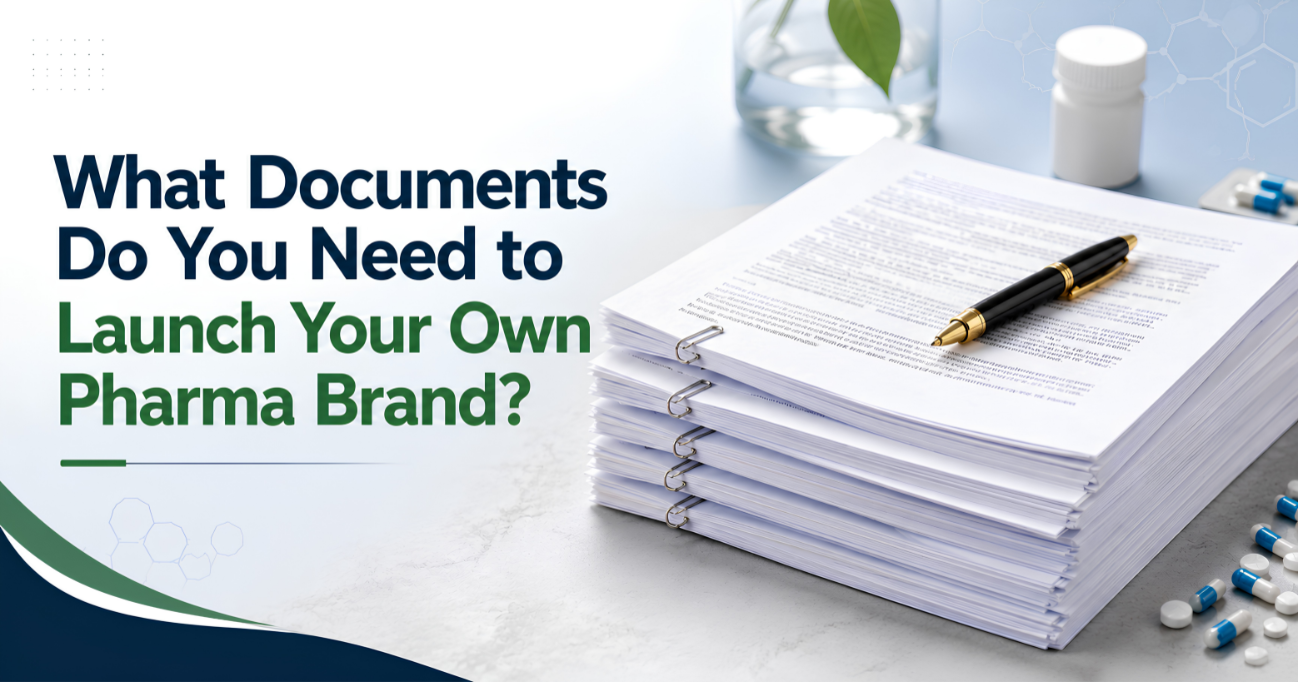
Starting your own pharmaceutical brand is an exciting business opportunity. Whether you are an entrepreneur, distributor, healthcare professional, or business owner looking to enter the healthcare sector, proper planning is the foundation of long-term success.
One of the most important steps before launching your pharma brand is ensuring that you have the necessary business and regulatory documentation in place. While the exact requirements may vary depending on your business model, product category, and applicable regulations, understanding the basic documentation can help you prepare more efficiently.
Whether you're starting a new pharma business or planning to launch your own brand, understanding the required documentation is an important first step.
Table of Contents
- Why Documentation Is Important
- Essential Documents You May Need
- Additional Documents That Can Help
- Common Mistakes to Avoid
- Choosing the Right Manufacturing Partner
- Conclusion
- Frequently Asked Questions
Why Documentation Is Important
Proper documentation helps businesses:
- Build credibility
- Ensure regulatory compliance
- Simplify business operations
- Speed up product launches
- Reduce unnecessary delays
- Strengthen relationships with manufacturing partners
Having organized documentation also makes communication with suppliers, distributors, and business partners much smoother.
Essential Documents You May Need
1. Company Registration
Your business should have a legally registered entity such as:
- Proprietorship
- Partnership
- LLP
- Private Limited Company
The appropriate business structure depends on your long-term business goals.
2. PAN Card
A PAN card is generally required for financial transactions, taxation, and opening business bank accounts.
3. GST Registration
If applicable to your business, GST registration helps you conduct business legally and manage taxation efficiently.
4. Drug License (Where Applicable)
Depending on your business activities and applicable regulations, a valid drug license may be required for manufacturing, distribution, or sale of pharmaceutical products.
Always consult the relevant regulatory authorities to determine the specific license requirements for your business.
5. Trademark Registration
Registering your brand name helps protect your identity and prevents unauthorized use of your brand in the marketplace.
6. Product Artwork and Label Approval
Every pharmaceutical product requires professionally designed packaging and labels that comply with applicable regulations.
Labels generally include:
- Brand Name
- Product Name
- Batch Number
- Manufacturing Date
- Expiry Date
- MRP
- Storage Instructions
- Manufacturer Details
7. Product Specifications
Maintaining proper product specifications helps ensure consistency, quality, and smooth manufacturing processes.
8. Manufacturing Agreement
If you are working with a third-party manufacturing partner, a clear manufacturing agreement helps define:
- Product specifications
- Production timelines
- Responsibilities
- Quality expectations
- Commercial terms
Additional Documents That Can Help
Depending on your products and business model, you may also need:
- Import Export Code (IEC) for exports
- FSSAI Registration (for applicable nutraceutical or food products)
- Non-Disclosure Agreements (NDAs)
- Marketing Authorization documents (where applicable)
- Product dossiers or technical documentation
Requirements can vary based on product category and destination market.
Common Mistakes to Avoid
Many new businesses face delays because they:
- Start branding before completing registrations
- Skip trademark protection
- Ignore documentation requirements
- Choose manufacturers without proper verification
- Keep incomplete business records
Preparing documentation early can help avoid unnecessary challenges later.
Choosing the Right Manufacturing Partner
Documentation is only one part of building a successful pharma brand. Selecting a reliable manufacturing partner is equally important.
When evaluating a manufacturer, consider factors such as:
- Manufacturing capabilities
- Quality standards
- Product portfolio
- Regulatory compliance
- Timely communication
- Transparent business practices
- Long-term partnership potential
A dependable manufacturing partner can make the process of launching and expanding your pharma brand much more efficient.
Why Businesses Choose Agrosaf Pharmaceuticals
Agrosaf Pharmaceuticals supports healthcare businesses with a diverse portfolio of pharmaceutical, nutraceutical, Ayurvedic, Derma and OTC products through trusted manufacturing partnerships.
With a focus on quality, innovation, and business collaboration, Agrosaf works closely with partners to help streamline product development and support long-term business growth.
Conclusion
Launching your own pharma brand involves much more than selecting products and designing packaging. Proper documentation forms the backbone of a successful business by supporting compliance, improving operational efficiency, and building trust with customers and partners.
Since documentation requirements may differ based on your business model, product category, and applicable regulations, it's always advisable to consult qualified legal or regulatory professionals before proceeding.
By combining careful planning with the right manufacturing partner, businesses can build a strong foundation for sustainable growth in the pharmaceutical industry.
Frequently Asked Questions (FAQs)
1. What is the first step to starting a pharma brand?
The first step is establishing a legal business entity and understanding the regulatory requirements applicable to your business model.
2. Is a trademark important for a pharma brand?
Yes. A trademark helps protect your brand identity and reduces the risk of brand name conflicts.
3. Do all pharma businesses need the same documents?
No. Documentation requirements vary depending on business activities, product categories, and applicable regulations.
4. Can I launch a pharma brand through third-party manufacturing?
Yes. Many businesses choose third-party manufacturing to develop and market products without owning a manufacturing facility.
5. How do I choose the right pharmaceutical manufacturing partner?
Look for a partner with strong quality standards, transparent processes, diverse product capabilities, regulatory compliance, and reliable business support.
Conclusion / Notes
Launching a pharmaceutical brand requires proper planning and documentation. Having the right legal and business documents in place helps ensure smoother operations, regulatory compliance, and long-term business growth.
0 Comments
Recent Posts