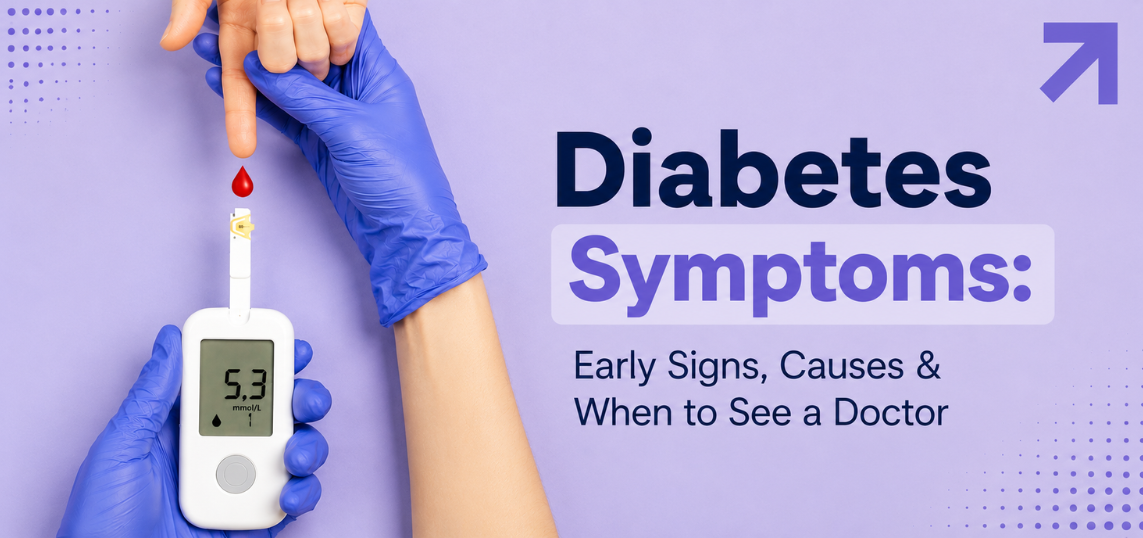
Diabetes is one of the most common chronic health conditions affecting millions of people worldwide. It occurs when the body is unable to produce enough insulin or cannot use insulin effectively, leading to high blood sugar levels. While diabetes can develop gradually, recognizing its early symptoms can help with timely diagnosis and better management.
Many people ignore the warning signs until complications begin to appear. Understanding the symptoms of diabetes can help you seek medical advice early and reduce the risk of serious health problems.
What Is Diabetes?
Diabetes is a condition in which blood glucose (blood sugar) levels remain higher than normal. Glucose is the body's primary source of energy, but it requires insulin, a hormone produced by the pancreas, to enter the cells.
The three most common types of diabetes include:
- Type 1 Diabetes
- Type 2 Diabetes
- Gestational Diabetes
Among these, Type 2 diabetes is the most common and is often linked to lifestyle and genetic factors.
Common Symptoms of Diabetes
The symptoms may appear slowly, especially in Type 2 diabetes. Some people may not notice any signs until the condition becomes more advanced.
Common symptoms include:
- Frequent urination
- Increased thirst
- Constant hunger
- Unexplained weight loss
- Fatigue or low energy
- Blurred vision
- Slow-healing wounds
- Frequent infections
- Tingling or numbness in the hands and feet
- Dry skin
- Increased irritability
- Difficulty concentrating
If you experience several of these symptoms together, it's important to consult a healthcare professional.
Early Warning Signs of Diabetes
Early detection plays a key role in managing diabetes effectively. Some of the earliest warning signs include:
- Feeling thirsty more often than usual
- Waking up multiple times at night to urinate
- Feeling tired even after adequate sleep
- Sudden weight loss without dieting
- Frequent fungal or skin infections
- Cuts and wounds taking longer to heal
Symptoms of Type 1 vs Type 2 Diabetes
| Type 1 Diabetes | Type 2 Diabetes |
|---|---|
| Symptoms develop quickly | Symptoms develop gradually |
| Common in children and young adults | More common in adults but can occur at any age |
| Sudden weight loss | Often associated with overweight or obesity |
| Requires insulin therapy | May be managed with lifestyle changes, medication, or insulin |
What Causes Diabetes?
Several factors can increase the risk of developing diabetes, including:
- Family history
- Overweight or obesity
- Physical inactivity
- Unhealthy diet
- High blood pressure
- High cholesterol
- Age
- Polycystic Ovary Syndrome (PCOS)
- History of gestational diabetes
When Should You See a Doctor?
You should consult a healthcare provider if you notice:
- Persistent excessive thirst
- Frequent urination
- Unexplained weight loss
- Blurred vision
- Extreme fatigue
- Slow-healing wounds
- Recurrent infections
Early diagnosis allows for better blood sugar management and helps reduce the risk of complications.
How Is Diabetes Diagnosed?
Healthcare professionals may recommend:
- Fasting Blood Sugar Test
- HbA1c Test
- Random Blood Sugar Test
- Oral Glucose Tolerance Test (OGTT)
These tests help determine whether blood sugar levels are within a healthy range.
Tips to Reduce Your Risk of Type 2 Diabetes
While not all cases of diabetes can be prevented, adopting healthy lifestyle habits may help reduce the risk of Type 2 diabetes.
Some healthy habits include:
- Eat a balanced diet rich in vegetables, fruits, whole grains, and lean proteins.
- Stay physically active for at least 150 minutes each week.
- Maintain a healthy body weight.
- Limit sugary drinks and highly processed foods.
- Get enough sleep.
- Manage stress through relaxation techniques or regular exercise.
- Schedule regular health check-ups if you have risk factors.
Support Your Diabetes Wellness Journey
Managing diabetes requires a healthy lifestyle, regular physical activity, a balanced diet, routine blood sugar monitoring, and following your healthcare provider's advice. Alongside these practices, some individuals may choose Ayurvedic formulations to support their overall wellness.
Agrosaf Diabetics Tablet and Agrosaf Diabetic Syrup are Ayurvedic formulations made with carefully selected herbal ingredients traditionally used to support metabolic health and healthy blood sugar management. When used as part of a healthy lifestyle and under the guidance of a healthcare professional, these products may complement your overall diabetes wellness routine.
Frequently Asked Questions
What is the first symptom of diabetes?
Frequent urination and increased thirst are among the earliest and most common symptoms.
Can diabetes develop without symptoms?
Yes. Many people with Type 2 diabetes have no noticeable symptoms in the early stages, making regular health check-ups important.
Is frequent urination always a sign of diabetes?
Not always. It can have several causes, but if it occurs with excessive thirst or unexplained weight loss, you should consult a healthcare professional.
Can diabetes be prevented?
Type 1 diabetes cannot currently be prevented. However, healthy lifestyle habits may help reduce the risk of developing Type 2 diabetes.
When should I get tested for diabetes?
If you have symptoms, a family history of diabetes, are overweight, or have other risk factors, speak with your healthcare provider about appropriate screening.
Conclusion
Recognizing the early symptoms of diabetes can make a significant difference in managing the condition effectively. Warning signs such as frequent urination, excessive thirst, fatigue, blurred vision, and slow-healing wounds should never be ignored. If you notice these symptoms, seek medical advice promptly for proper evaluation and testing. Early diagnosis, combined with healthy lifestyle choices and appropriate medical care, can help manage blood sugar levels and reduce the risk of long-term complications.
Conclusion / Notes
Recognizing the early symptoms of diabetes can help with timely diagnosis and better blood sugar management. If you experience signs such as frequent thirst, excessive urination, fatigue, blurred vision, or slow-healing wounds, consult a qualified healthcare professional. Early diagnosis, a healthy lifestyle, and appropriate medical care can help reduce the risk of complications and improve overall well-being.
0 Comments
Recent Posts