India's pharmaceutical industry is entering an important phase of growth. Rising healthcare requirements, increasing demand for affordable medicines, expanding export opportunities and improvements in pharmaceutical manufacturing are creating new possibilities for businesses across the sector.
For pharmaceutical distributors, retailers, manufacturers, PCD pharma franchise businesses and emerging healthcare companies, 2026 presents opportunities to expand operations, strengthen product portfolios and build more reliable business partnerships.
However, growth in the pharmaceutical sector is not just about increasing sales. Businesses also need to focus on product quality, consistent supply, regulatory compliance, customer relationships and changing market requirements.
In this blog, we explore the major developments shaping the Indian pharmaceutical industry in 2026 and the opportunities they create for growing pharma businesses.
1. India's Pharmaceutical Industry Continues to Expand
India has established itself as one of the world's leading pharmaceutical markets. It ranks third globally by pharmaceutical production volume and eleventh by value.
According to the Government of India's Department of Pharmaceuticals, the industry's annual turnover reached approximately 4.72 lakh crore in FY 2024–25, reflecting its growing contribution to the economy.
India is also an important supplier of generic medicines, accounting for around 20% of global generic medicine supply. Its pharmaceutical exports reached approximately US$30.5 billion in FY 2024–25, with medicines supplied to markets across the world.
The domestic pharmaceutical market is valued at around US$60 billion in FY 2026 and is projected to reach US$130 billion by 2030.
These developments indicate opportunities for businesses involved in pharmaceutical manufacturing, distribution, product sourcing and healthcare supply.
2. Growing Demand for Generic and Affordable Medicines
Access to affordable medicines remains an important priority for healthcare systems. Generic medicines play a significant role by providing treatment alternatives at competitive prices, subject to applicable quality and regulatory requirements.
India's established generic medicine manufacturing ecosystem creates opportunities for:
Pharmaceutical distributors expanding their product portfolios.
Retail pharmacies looking for dependable suppliers.
Pharma companies entering new therapeutic categories.
Businesses exploring domestic and international markets.
For growing pharmaceutical businesses, understanding product demand and selecting suitable products for their target markets can support sustainable growth.
Rather than focusing only on product prices, businesses should evaluate product quality, documentation, availability and supplier reliability before making purchasing decisions.
3. Opportunities in Pharmaceutical Manufacturing
Pharmaceutical manufacturing continues to be an important growth area in India.
Government initiatives, including the Production Linked Incentive (PLI) schemes, are supporting domestic manufacturing capabilities, investment and the development of high-value pharmaceutical products.
The sector is also moving towards more specialised manufacturing, including:
Complex generic medicines.
Biopharmaceutical products.
Active Pharmaceutical Ingredients (APIs).
High-value formulations.
Advanced pharmaceutical products.
For growing pharma companies, these developments create opportunities to explore manufacturing partnerships, strengthen product development capabilities and diversify their business portfolios.
Companies considering third-party manufacturing should assess manufacturing capabilities, quality systems, regulatory documentation, production capacity and the manufacturer's track record before entering into an agreement.
4. PCD Pharma Franchise and Distribution Opportunities
The expansion of India's pharmaceutical market is creating opportunities for businesses interested in pharmaceutical distribution and PCD pharma franchise models.
These business models allow companies and entrepreneurs to participate in the pharmaceutical market through product distribution and marketing arrangements.
However, choosing the right business partner is an important decision.
Before entering a PCD pharma franchise or distribution partnership, businesses should evaluate:
Product portfolio: Does the company offer products relevant to the target market?
Quality standards: Are appropriate quality controls and documentation maintained?
Market demand: Is there a realistic customer base for the selected products?
Supply consistency: Can the supplier support regular product requirements?
Business support: Are product information, communication and order-related assistance available?
Commercial terms: Are pricing, minimum order quantities and payment conditions clearly defined?
A well-planned distribution strategy, supported by reliable business relationships, can help companies build a stronger presence in their target markets.
5. Pharmaceutical Exports Are Creating New Business Possibilities
India's pharmaceutical industry has a strong international presence, supplying medicines to countries across different regions.
In FY 2024–25, pharmaceutical exports reached approximately US$30.5 billion, according to government data. Indian pharmaceutical products are supplied to both emerging and highly regulated markets.
For businesses exploring international expansion, this creates opportunities to understand new markets, identify suitable product categories and develop export partnerships.
However, entering an international market requires more than identifying demand. Businesses must also understand:
Country-specific regulatory requirements.
Product registration and approval processes.
Import and export documentation.
Quality and labelling requirements.
Distribution networks and local market conditions.
A clear understanding of these requirements is essential before entering any export market.
6. Technology Is Changing Pharmaceutical Business Operations
Technology is becoming increasingly relevant across pharmaceutical manufacturing, procurement, inventory management and distribution.
Businesses are gradually adopting digital systems to improve operational visibility, reduce manual work and make more informed decisions.
Some important areas include:
Digital inventory management: Helps businesses monitor stock levels, identify fast-moving products and plan replenishment.
Data-driven procurement: Supports purchasing decisions based on demand patterns, product availability and business requirements.
Digital business communication: Makes it easier for suppliers, distributors and customers to exchange product information and coordinate orders.
Automation: Can help streamline repetitive administrative and operational processes.
For pharmaceutical distributors and growing companies, adopting suitable digital tools can improve efficiency and support better business management.
7. Product Portfolio Diversification Can Support Business Growth
A diverse pharmaceutical product portfolio can help businesses serve different customer requirements and explore additional market opportunities.
For distributors and pharmaceutical companies, portfolio planning should be based on actual market demand rather than simply increasing the number of products.
Some important considerations include:
Understanding the requirements of the target customer base.
Evaluating demand across relevant therapeutic categories.
Reviewing product specifications and documentation.
Monitoring product availability and supply requirements.
Identifying opportunities to introduce relevant new products.
A carefully selected product portfolio can help businesses strengthen customer relationships and serve a wider range of pharmaceutical requirements.
8. Quality, Compliance and Supplier Reliability Will Remain Important
As the pharmaceutical industry grows, quality and regulatory compliance remain essential to building long-term business credibility.
Businesses should not select suppliers only on the basis of competitive pricing. Product quality, documentation, consistency and transparent communication are equally important.
Before finalising a supplier, pharmaceutical businesses should consider:
Whether the supplier follows applicable regulatory requirements.
Whether relevant product documentation is available.
Whether quality assurance processes are clearly established.
Whether product specifications match the purchase requirements.
Whether the supplier can communicate clearly about availability and order timelines.
Reliable supplier relationships can help reduce avoidable procurement challenges and support more consistent business operations.
9. How Growing Pharma Businesses Can Prepare for 2026 and Beyond
The opportunities in India's pharmaceutical industry are significant, but businesses need a practical approach to make the most of them.
Here are five areas worth prioritising:
1. Understand your target market
Identify the requirements of pharmacies, distributors, healthcare businesses or other customers you intend to serve.
2. Build relevant product portfolios
Choose products according to customer needs, market demand and applicable regulatory requirements.
3. Evaluate business partners carefully
Work with suppliers and manufacturers who can provide appropriate product information, quality documentation and clear communication.
4. Improve procurement and inventory planning
Use demand insights and inventory monitoring to make more informed purchasing decisions.
5. Focus on long-term relationships
Consistent communication, dependable service and transparent business practices help establish stronger professional relationships.
How Agrosaf Supports Pharmaceutical Business Opportunities
As India's pharmaceutical sector continues to develop, access to a relevant product portfolio and dependable business relationships becomes increasingly important.
Agrosaf Pharmaceuticals operates in the pharmaceutical space with a broad product portfolio and a focus on serving business requirements.
With more than 1,700 products in its portfolio and a business presence across multiple Indian states and international markets, Agrosaf aims to connect with pharmaceutical businesses looking for product and sourcing opportunities.
For distributors, retailers and other pharmaceutical businesses, exploring the right product options and understanding supplier requirements can be an important step towards building sustainable operations.
Explore the Agrosaf B2B Portal to learn more about its pharmaceutical product portfolio and business offerings.
Conclusion
The Indian pharmaceutical industry in 2026 offers opportunities across manufacturing, generic medicines, pharmaceutical distribution, exports and digital business operations.
However, sustainable growth will depend on more than market expansion. Businesses that prioritise quality, regulatory compliance, relevant product selection, efficient operations and reliable partnerships will be better positioned to respond to changing market requirements.
For pharmaceutical distributors, retailers, manufacturers and emerging pharma businesses, understanding these developments can help shape more informed decisions and identify new areas for growth.
Frequently Asked Questions (FAQs)
1. What is the growth outlook for the Indian pharmaceutical industry in 2026?
India's pharmaceutical market is valued at approximately US$60 billion in FY 2026 and is projected to reach US$130 billion by 2030, indicating significant growth potential.
2. What are the major opportunities in India's pharmaceutical industry?
Major opportunities include generic medicines, pharmaceutical manufacturing, API production, PCD pharma franchises, distribution, exports and digital transformation.
3. Is pharmaceutical distribution a growing business opportunity in India?
Pharmaceutical distribution remains an important part of the healthcare supply chain. Businesses can explore opportunities by understanding local demand, selecting relevant products and building reliable supplier relationships.
4. What should businesses consider before choosing a pharmaceutical supplier?
Businesses should evaluate product quality, regulatory documentation, product availability, supplier reliability, pricing transparency and communication.
5. What is the role of generic medicines in India's pharmaceutical industry?
Generic medicines contribute to affordable healthcare by providing alternatives to branded medicines, subject to applicable quality and regulatory standards. India is one of the world's leading suppliers of generic medicines.
6. How can pharmaceutical businesses prepare for future market growth?
They can focus on relevant product portfolios, efficient inventory management, digital operations, regulatory compliance and long-term supplier relationships.
Disclaimer: This article is intended for general pharmaceutical industry and business information. Market figures and projections are based on published industry and government sources and may change over time.
Conclusion / Notes
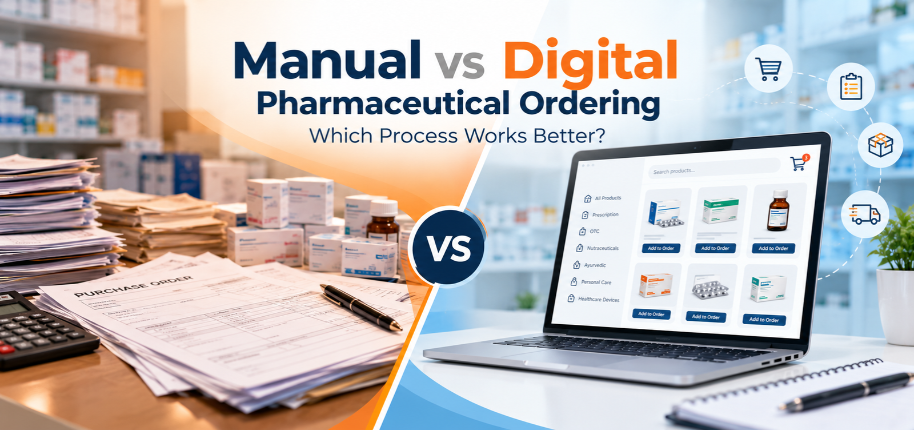
Manual ordering supports direct communication, while digital ordering can improve product discovery and order organisation. Businesses should choose a process that suits their order volume, product range and operational needs.
0 Comments
Recent Posts