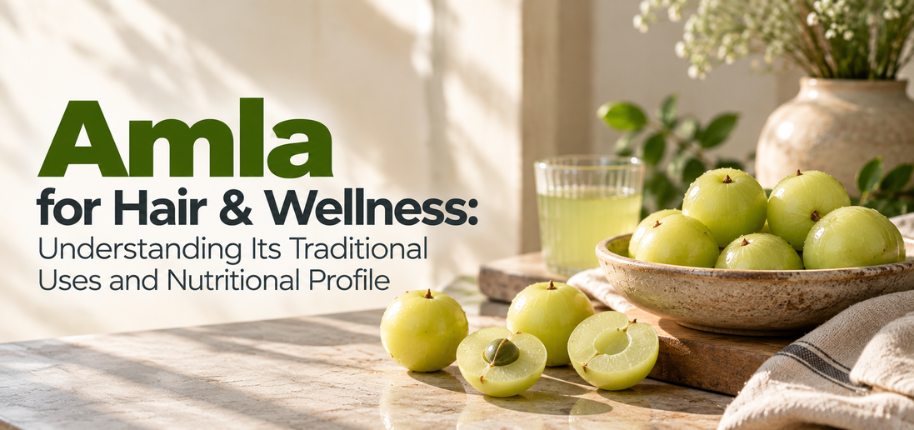
Amla for Hair & Wellness: Understanding Its Traditional Uses and Nutritional Profile
Amla has been a familiar part of Indian kitchens and traditional wellness practices for generations. From amla juice and pickles to hair oils and Ayurvedic formulations, this small, sour fruit is used in many different ways.
Today, amla is also a popular ingredient in hair care products, herbal supplements, and wellness formulations. Its appeal comes from its traditional significance and its nutritional composition, which includes vitamin C and various plant compounds.
But what makes amla so widely used? How is it traditionally associated with hair wellness, and what should consumers know before choosing an amla-based product?
Let's explore its traditional uses, nutritional profile, and role in everyday wellness.
What Is Amla?

Amla, also known as Indian gooseberry, is the fruit of Phyllanthus emblica, sometimes referred to as Emblica officinalis.
It is known for its distinctive sour, slightly bitter, and astringent taste. In India, amla is commonly consumed fresh, dried, or as part of traditional food preparations.
The fruit is also widely used in Ayurveda, where it is known as Amalaki. It has a long history of use in traditional wellness practices and is included in well-known Ayurvedic preparations such as Triphala and Chyawanprash.
Why Is Amla Traditionally Used in Ayurveda?
Amla holds an important place in Ayurveda, where it is traditionally valued as a Rasayana—a category associated with rejuvenation and maintaining overall well-being.
Traditionally, amla has been used in preparations intended to support general wellness, digestion, skin care, and hair care. It is also incorporated into dietary and herbal formulations.
These traditional uses reflect the role amla has played in Indian wellness practices for centuries. However, traditional use and modern clinical evidence are not the same. Amla should not be considered a proven treatment for a particular health condition simply because it has a long history of use.
Amla and Hair Wellness: Understanding the Connection

Amla is a familiar ingredient in traditional Indian hair care. It is found in hair oils, shampoos, masks, and herbal hair preparations.
Its popularity in hair care is linked to its traditional use and the presence of plant compounds such as polyphenols and tannins. Amla also contains vitamin C, which contributes to normal collagen formation in the body.
How Is Amla Used in Hair Care?
Amla is commonly included in:
Hair oils: Used as part of a regular hair-care routine to condition the hair.
Hair masks and powders: Incorporated into traditional herbal hair-care preparations.
Shampoos and conditioners: Used as a botanical ingredient in cosmetic formulations.
Herbal hair-care blends: Combined with other plant-based ingredients.
The effect of a product depends on its complete formulation and how it is used.
Can Amla Help With Hair Growth?
Amla is traditionally associated with hair wellness, but strong clinical evidence that amla alone can prevent hair loss or reliably stimulate hair growth is limited. Its use in hair oils and other cosmetic products should not be confused with a proven treatment for hair thinning or scalp conditions.
Hair fall can have several causes, including nutritional deficiencies, hormonal changes, stress, and scalp conditions. Persistent or unusual hair loss should be assessed by a qualified healthcare professional.
Understanding Amla's Nutritional Profile
Amla is valued for its combination of nutrients and naturally occurring plant compounds.
Here are some of its key nutritional components.
1. Vitamin C
Amla is widely recognised as a source of vitamin C. This nutrient contributes to normal collagen formation, supports the normal functioning of the immune system, and helps protect cells from oxidative stress.
The actual vitamin C content can vary depending on the fruit, processing method, and product formulation.
2. Polyphenols and Tannins
Amla contains plant compounds such as polyphenols and tannins. These compounds are studied for their antioxidant activity, although laboratory findings do not automatically establish specific health benefits in humans.
3. Dietary Fiber
Whole amla contains dietary fiber, which contributes to overall dietary fiber intake. However, the amount available in a product depends on whether it contains whole fruit, juice, powder, or a concentrated extract.
4. Other Naturally Occurring Compounds
Amla contains several other naturally occurring plant compounds that contribute to its overall composition. Their levels can vary significantly between fresh fruit and processed preparations.
Different Forms of Amla and How They Are Used
Fresh Amla
Commonly consumed as food or used in traditional recipes. It has a strong sour and astringent taste.

Amla Powder
Made from dried amla and used in food preparations, traditional formulations, and some hair-care products.

Amla Juice
A liquid preparation that may be consumed as part of a dietary routine. Its composition depends on the preparation and any added ingredients.

Amla Hair Oil
A cosmetic product used in hair-care routines. Its conditioning properties depend on the oil base and overall formulation.
What Should You Check Before Choosing an Amla-Based Product?
Not all amla products are the same. A fresh fruit, a hair oil, and a concentrated supplement have different purposes and formulations.
Before choosing a product, check:
Ingredients: Look at the complete ingredient list and identify whether the product contains amla fruit, powder, extract, or oil.
Intended use: Make sure the product is designed for dietary use or external application, as appropriate.
Product composition: Check the amount of amla or other key ingredients where this information is provided.
Quality and packaging: Look for clear manufacturer details, batch information, and appropriate storage instructions.
Claims: Be cautious of products promising guaranteed hair growth, reversal of hair loss, or treatment of medical conditions.
If you are considering concentrated amla supplements and take regular medication, have an existing health condition, or are pregnant or breastfeeding, consult a healthcare professional before use.
Amla in Modern Ayurvedic and Wellness Products
Amla continues to be used in modern wellness products because of its traditional importance, distinctive composition, and versatility across different product formats.
It may appear in herbal supplements, Ayurvedic formulations, hair oils, and other personal-care products. However, the purpose of the ingredient depends on the product category and its complete formulation.
For consumers, understanding the difference between a food ingredient, a cosmetic ingredient, and a concentrated supplement makes it easier to choose products with realistic expectations.
For healthcare businesses, ingredient transparency, product quality, formulation details, and clear product information are important considerations when evaluating amla-based products.
FAQs
Is amla traditionally used for hair care?
Yes. Amla has a long history of use in traditional Indian hair-care practices and is commonly included in hair oils, powders, and herbal formulations.
Does amla contain vitamin C?
Yes. Amla is recognised as a source of vitamin C, although the amount varies depending on the form and processing of the product.
Can amla prevent hair fall?
There is not enough strong clinical evidence to establish amla as a reliable treatment for hair fall. Persistent hair loss may require professional evaluation.
What is the difference between amla powder and amla extract?
Amla powder is generally made from dried fruit, while an extract is produced through a process designed to concentrate certain components. Their composition and strength may differ.
Is amla suitable for everyday use?
Amla is commonly consumed as food, but concentrated supplements may not be suitable for everyone. The appropriate choice depends on the product, individual circumstances, and intended use.
Conclusion
Amla is much more than a familiar sour fruit. Its place in Ayurveda, its nutritional composition, and its use in traditional hair-care practices have made it a popular ingredient in modern wellness products.
From fresh fruit and powder to herbal formulations and hair oils, amla is available in different forms for different purposes.
The key is to understand what the product contains, what it is intended for, and what the evidence actually supports. Traditional use can provide valuable context, but realistic expectations and informed product selection matter just as much.
Conclusion / Notes
Amla is traditionally valued in Ayurveda and widely used in hair-care and wellness products. Understanding its nutritional profile, product forms, and intended uses helps consumers make informed choices.
0 Comments
Recent Posts